Occitanie's green energy port of the future
Pamela Largue
Posted on: 28 May 2026
Port-La-Nouvelle in France is expanding its activities to prepare for biofuels, synthetic fuels, CO2 and hydrogen logistics.
Port-La-Nouvelle is France’s first port to operate under a public-private partnership model and is currently undergoing an ambitious transformation.
For decades, Port-La-Nouvelle operated as a traditional shallow-draft port. But in 2010, the Occitanie region recognised that the facility needed a reinvention to remain economically relevant in a rapidly changing energy landscape. This vision led to the creation of a unique public-private partnership that enabled large-scale redevelopment while sharing investment risks with private sector partners.
Enlit On The Road spoke to Hans Kerstens, chief executive of Semop Port-La Nouvelle, about how the port is repositioning itself from a historic regional gateway into a strategic hub for the energy transition.
Today, the port is emerging as a cornerstone of the region’s long-term decarbonisation strategy. “When we started with this concept of creating a brand-new deep-water port, we tried to anticipate the flows of tomorrow and the role of a port tomorrow,” explained Kerstens.
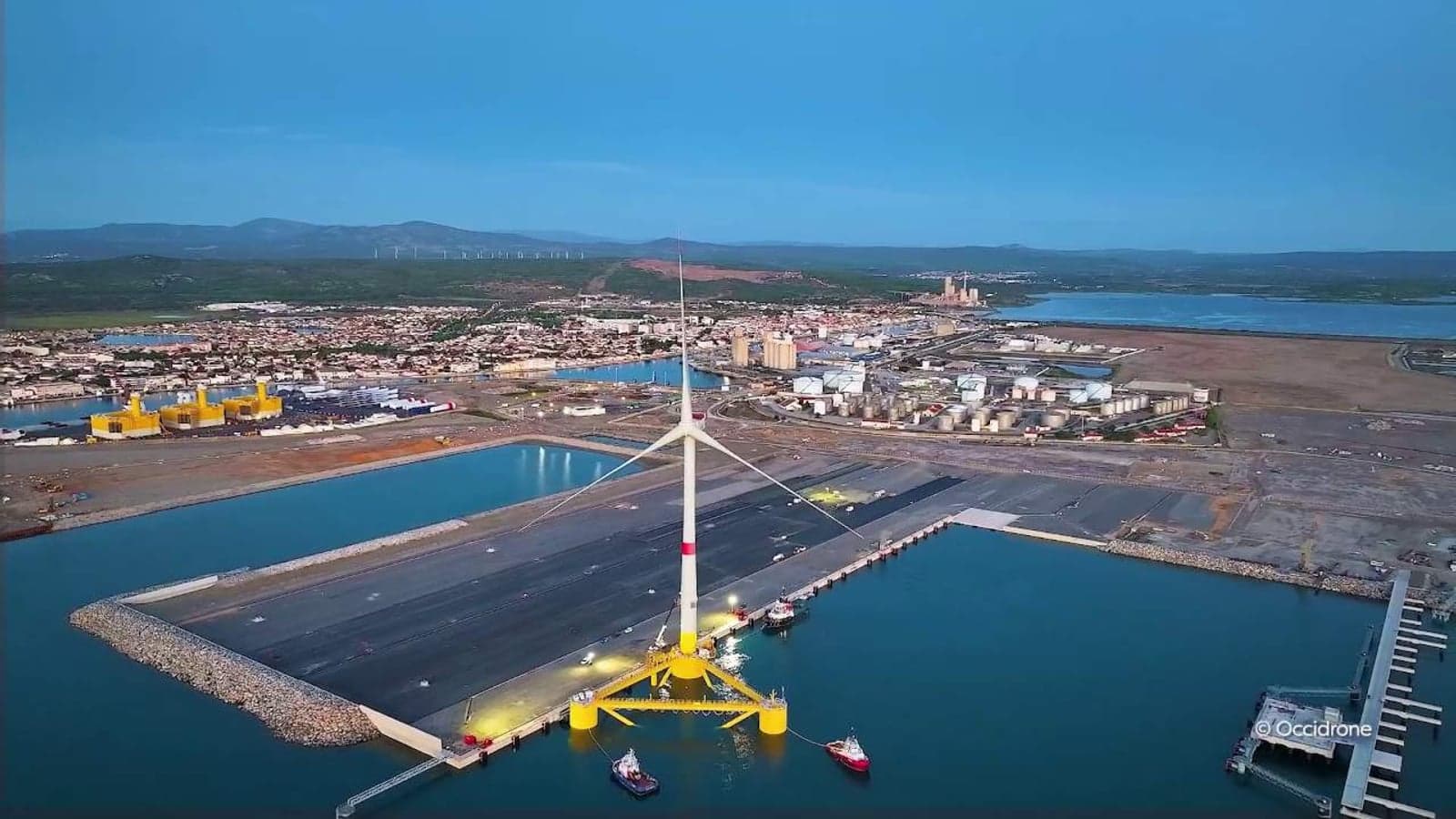
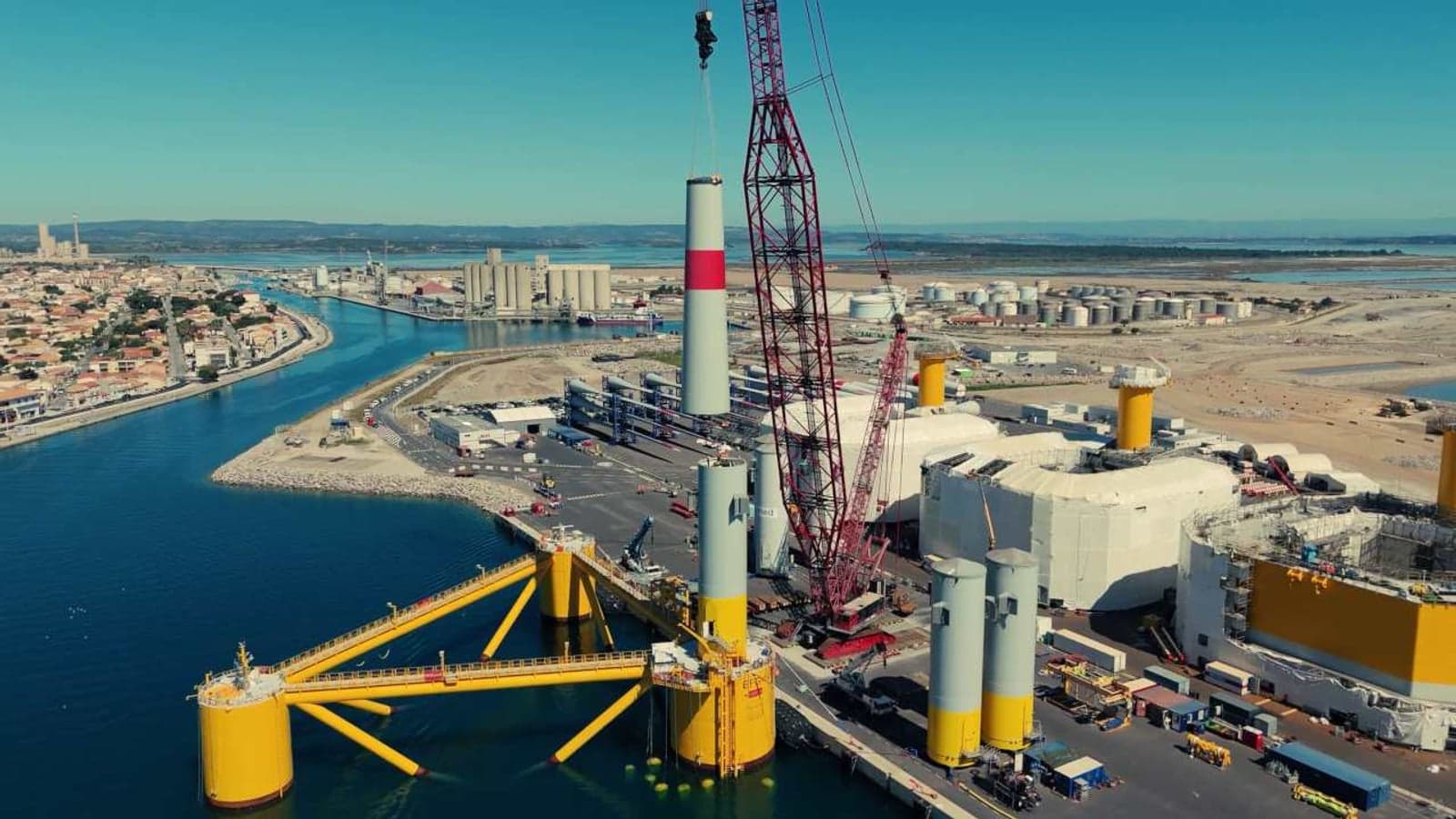
That future-facing approach is already visible across the port’s expanding activities. Port-La-Nouvelle has therefore positioned itself at the centre of the Mediterranean floating offshore wind market, anticipating the growing importance of offshore renewables in deeper waters.
Kerstens highlighted that the port recently welcomed two pioneering floating offshore wind projects, including the integration of three turbines and the assembly of three floating foundations at the port before deployment offshore. In total, six 10MW turbines were installed at sea last year.
More from Enlit on the Road Toulouse
While the milestone demonstrated the technical potential of the sector and the port, Kerstens also highlighted the realities of building a new industry from the ground up.
“It’s a brand-new industry, every day a new challenge pops up. What really made the difference was the willingness of people to go the extra mile — the human factor contributed to the success of the two projects.”
Alongside offshore wind, Port-La-Nouvelle is also preparing for a future centred on low-carbon fuels and hydrogen. The port is diversifying beyond traditional petroleum liquids into biofuels, synthetic fuels, CO2 and hydrogen logistics.
Also if interest:
Energy sovereignty at Europe’s Atlantic arc: The Port of Bilbao’s integrated energy model
EU Ports Strategy sets out to equip ports and shipping for energy transition
“In the liquid bulk, there is a transition in the type of demand and the type of fuel needed for tomorrow,” Kerstens said, adding that they are transitioning to receive and distribute CO2 and hydrogen.
Central to this strategy is the Hyd’Occ project, set to become France’s largest renewable hydrogen production facility. “We want to play a key role in becoming an entry port for hydrogen,” Kerstens said, adding that Europe will likely need to import significant volumes from regions such as North Africa to meet future demand.
But the Port’s leadership is also conscious that long-term success will depend on strategic partnerships and careful planning.
“We only have one chance to lease out the space that we have. We need to find partners who have a vision that is aligned with ours,” Kerstens concluded.