Floating hydrogen power hub for shipping validated in UK
Jonathan Spencer Jones
Posted on: 28 May 2026
A grid independent floating hydrogen hub for delivering power to maritime craft at berth has been validated in the UK.
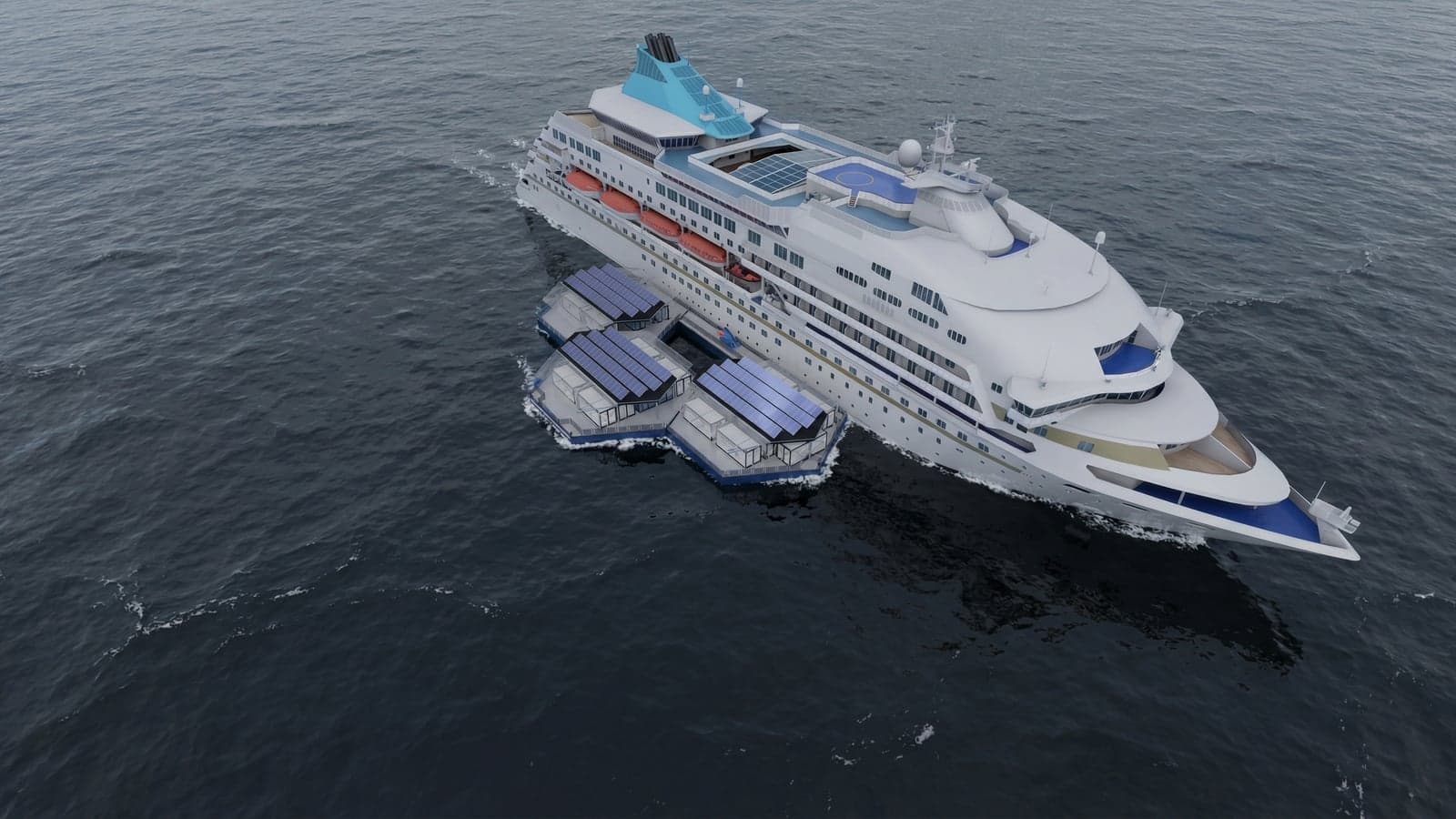
The government supported initiative, which has been led by ELIRE Maritime, reports demonstrating that large vessels can realistically be powered at berth today using existing hydrogen, battery, fuel cell and electrical technologies integrated into a modular floating maritime system.
The solution, designed for rapid deployment in ports globally, is expected to support the reduction of up to 500,000t of CO₂ emissions globally over the next decade through a scalable clean energy infrastructure capable of operating independently from constrained port grids.
“Ports are under increasing pressure to decarbonise while facing major infrastructure constraints,” said Luke Jenkinson, founder and CEO of ELIRE Maritime.
“The hydrogen power hub proves that ports do not need to wait years for grid upgrades to begin reducing emissions. We have validated a practical, scalable and deployable system capable of delivering clean power directly where it is needed most.”
Floating platform
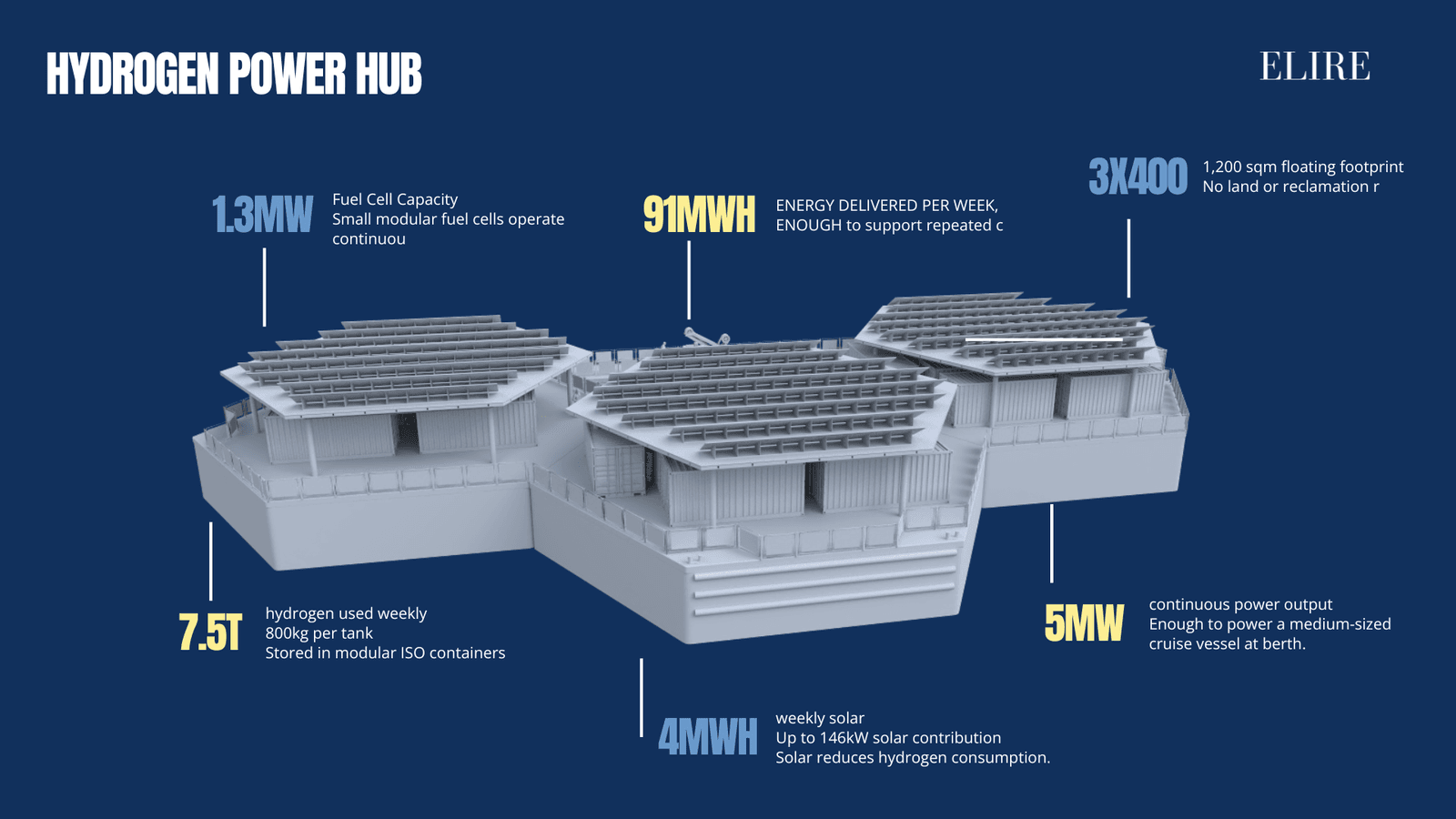
The hydrogen power hub integrates three modular hexagonal floating platforms with a combined 1,200m2 footprint holding approximately 45MWh of battery energy storage capacity, modular fuel cell systems, hydrogen powered generation, onboard renewable generation and advanced grid forming AC/DC electrical architecture.
At full configuration, the system validated should be capable of delivering 5MW of continuous clean power output directly to vessels at berth, enough to support medium-sized cruise vessels and other large maritime assets requiring both 6.6kV and 11kV shore power connections.
Further, the platform should deliver approximately 91MWh of energy per week while supporting repeated vessel charging operations without requiring major civil works, land reclamation or expensive grid reinforcement.
Also of interest
Occitanie's green energy port of the future
The system uses approximately 7,500–8,000kg of hydrogen weekly, stored within modular ISO-compatible low pressure storage containers integrated directly into the floating infrastructure.
The current layout accommodates seven onboard hydrogen tanks, with refuelling operations expected approximately twice weekly. With this, ports can adopt hydrogen incrementally without requiring permanent hydrogen infrastructure during the early deployment phases.
Modular 1.3MW fuel cells operate continuously throughout the week to gradually charge the onboard batteries before rapidly dispatching energy when vessels arrive at berth.
The solution also incorporates onboard solar generation capable of contributing up to 146kW of renewable power, reducing overall hydrogen consumption and improving efficiency.
Validation programme
The six-month validation programme included hydrodynamic, structural, electrical and operational activities.
Wave tank testing conducted by the University of Strathclyde validated platform stability, structural integrity, motion response and multi-platform interconnectivity across varying sea states.
Triton Anchor Europe completed mooring analysis, anchor system validation, procurement review and installation planning.
Ricardo UK and Rux Energy UK validated the hydrogen-to-power systems, integrating modular low pressure hydrogen storage with hybrid fuel cell technologies and power systems.
Schneider Electric engineered and validated the electrical architecture, including grid forming inverter systems and battery energy storage systems capable of delivering stable utility-grade power across both 50Hz and 60Hz networks.
The programme confirmed that the complete system, i.e. hydrogen generation, storage, battery integration, electrical architecture and floating infrastructure, operates cohesively as a deployable maritime energy to power solution.
Port decarbonisation
The hydrogen power hub is expected to become an important component in the decarbonisation of ports and shipping, with challenges to the electrification at scale of berthed vessels with land-based infrastructure.
Feasibility stage emissions analysis led by Ricardo UK are reported to have demonstrated that the system may reduce vessel emissions at berth by approximately 77% compared to conventional onboard diesel generation, even when accounting for hydrogen production, transport, storage and operational losses.
The analysis indicates that it could eliminate approximately 47t of CO₂ emissions per vessel per week, equivalent to approximately 2,444t annually per vessel under current operation, while also significantly reducing NOx, SOx and particulate emissions through the elimination of diesel engine operation during berth stays.
The consortium estimates a global addressable market of approximately 62TWh annually for grid-independent maritime energy solutions, particularly in ports where conventional shore power deployment remains constrained or economically impractical.
Currently the hydrogen-powered system is more expensive than conventional diesel or grid electricity, estimated at approximately £0.25–£0.50/kWh, compared to the conventional shore power of approximately £0.15–£0.25/kWh.
However, the consortium believes future reductions in hydrogen pricing, manufacturing scale, modular standardisation and system optimisation could significantly improve the commercial competitiveness over time.
With the validation completed, ELIRE Maritime is now progressing discussions for similar and larger scale deployments from the UK to Europe and Australia.
Related tags
Latest in Projects
All articles+1
E-NERGY Cluster returns to the EU Energy Projects Podcast ahead of EUSEW 2026
The EU Energy Projects Podcast welcomes back the E-NERGY Cluster for its second dedicated episode, bringing together representatives from EU-funded projects EU-DREAM, DIGITISE and CELINE to discuss one of the most pressing challenges of the energy transition: how to place citizens at the center of an increasingly digital energy system.
- Areti Ntaradimou
- 03/06/2026