SP Energy Networks kicks off £12bn power network overhaul
Yusuf Latief
Posted on: 2 April 2026
The overhaul aims to boost much-needed grid capacity in the country as it, alongside others on the continent, risks stranding renewables due to grid bottlenecks.
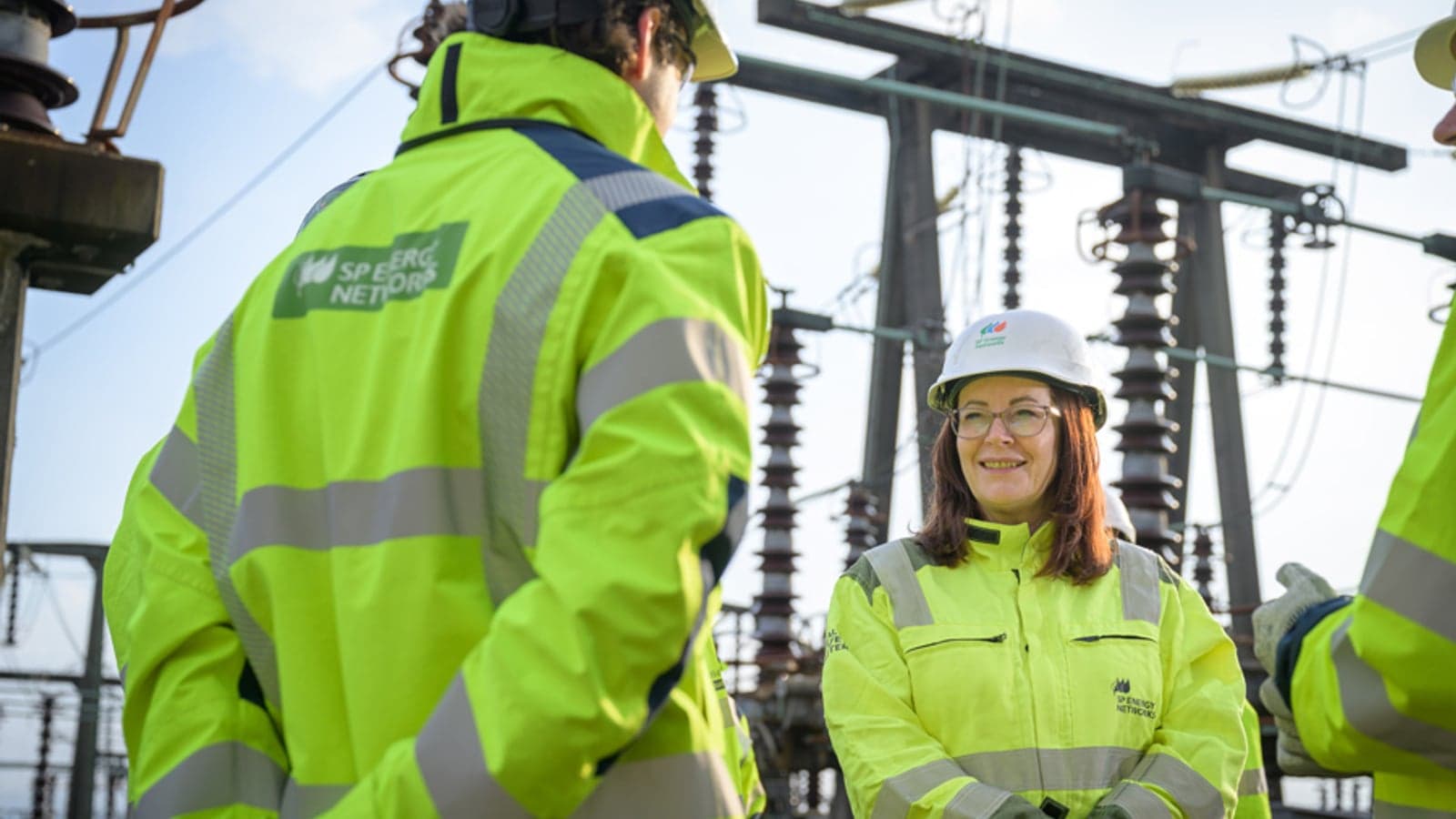
SP Energy Networks has initiated its T3 investment, a £12 billion ($15.8 billion) rewiring programme of the central and southern Scotland electricity grid.
As Britain’s electricity demand increases, and is expected to double by 2050, its power grid needs investment to ensure resilience.
To do this, SP Energy Networks has now kicked off its plan, running from 2026 to 2031, to build 12 new major substations, upgrade 450km of existing circuits, reconduct 87km of overhead lines and replace 35km of underground cable.
The investment also includes two new subsea electrical superhighways off the east coast of Scotland. The multi-billion-pound Eastern Green Link 1 and Eastern Green Link 4 subsea high voltage lines will have a joint capacity of 4GW and have the combined subsea cable length of 706km.
Have you read?
Eastern Green Link 4 confirms £3bn supply chain contracts
According to the TSO, the network overhaul will help increase grid capacity, strengthen Britain’s energy security and reduce constraint costs.
Said Nicola Connelly, Chief Executive Officer of SP Energy Networks: “The next five years are pivotal to achieving Britain’s clean power ambitions. Our electricity networks are the backbone of the country’s electricity system, getting the power from where it’s generated to homes and businesses across the country.
“Between now and 2031, we are undertaking the biggest overhaul of the electricity grid since its inception, with tens of thousands of people helping transform and modernise aging infrastructure.”
The company also lists UK and Irish supply chain companies benefiting from the rewiring programme, including Kirby Group Engineering, headquartered in Limerick, which has worked with SP Energy Networks for the last 13 years.
Specifically, Kirkby has now secured a place on a strategic framework that will see it and 18 other suppliers benefit from up to £5.4 billion ($7.1 billion) in contracts over the next 10 years.
Michael Murray, Power and Renewables Director at Kirby Group Engineering, said: “Through our strategic partnership with SP Energy Networks, we are expanding our operations, creating employment opportunities and scaling our training and development programmes.
“The delivery of this critical infrastructure upgrade is already creating high-quality, skilled jobs and will leave a legacy of social value in communities across Scotland.”
European grid capacity
The programme comes as the power grid, both in the UK and across Europe, faces increasing risks of bottlenecks and delays.
In March, the UK government announced a set of reforms to strengthen the conditions for joining and remaining in the queue for demand connections. These reforms will prioritise strategically important projects, such as AI data centres and industrial sites.
According to the government, the queue for demand connections to the UK’s transmission network grew by 460% in the 6 months to June 2025.
Speculative applications, they say, are inflating the pipeline, delaying connections for strategically important projects. This has contributed to waits of up to 15 years for projects to connect to the grid.
Meanwhile, research from Ember points to over 120GW of planned renewable energy being stranded due to power grid bottlenecks.
According to the London-based climate and energy think tank in the Crossed wires: Grid capacity could block EU energy security report, one in every two grid operators has insufficient grid capacity to connect planned new wind and solar.
Grid bottlenecks are no longer simply a technical issue. They are a security risk.
The most severe constraints, it says, are found in Austria, Bulgaria, Latvia, the Netherlands, Poland, Portugal, Romania and Slovakia. However, the challenge is likely even larger as many countries, including major power systems such as Germany and Italy, do not publish grid capacity data.
Commenting was Elisabeth Cremona, Energy Analyst at Ember: “With power costs spiking, Europe’s grids are a crucial enabler in the race to install renewables to replace imported fossil fuels and protect households against volatile prices.”
“Grid bottlenecks are no longer simply a technical issue. They are a security risk.”
More on the power grid:
The overlooked grid factor shaping Europe’s energy security
Lessons from grid bottlenecks in Germany and the Netherlands
Ember adds that grid barriers impact both large renewable projects and household installations.
Across the 17 countries reporting transmission grid capacity, more than two-thirds (66%) of new wind and large-scale solar planned by 2030 are at risk. Insufficient grid capacity could delay or prevent 16GW of rooftop solar installations, affecting more than 1.5 million households in six out of the 13 countries reporting distribution grid data.
“Following the 2022 energy crisis, investment in rooftop solar surged as households sought protection from volatile energy prices,” said Cremona. “As countries look for ways to protect themselves from the present energy price spikes, we can’t afford for grids to stand in their way.”
The analysis adds that grid constraints are also shaping where new investment can take place in Europe.
Specifically, as industrial and data centres demand grows, project developers are likely to favour locations where grid capacity is available. Across the seven countries that publish this data, three have zero capacity for new industrial load: Austria, Bulgaria and Romania. Czechia has ample available capacity, with Belgium and Latvia also able to accommodate substantial new demand.
Related tags
Latest in Grids
All articlesPartner content
+2
New G3 certification: Multi-utility metering over a single communication network
A single communication network for electricity, gas and water meters: G3 certification release V8 enables integrated multi-utility metering with battery-powered devices.
- Guest/partner contributor
- 08/06/2026