Too hot to cope: Why cooling must become Europe’s next social right
Guest/partner contributor
Posted on: 19 May 2026
Marine Cornelis explores what summer energy poverty means, why air conditioning will not save us and what fair sustainable solutions look like for citizens, cities and policymakers.
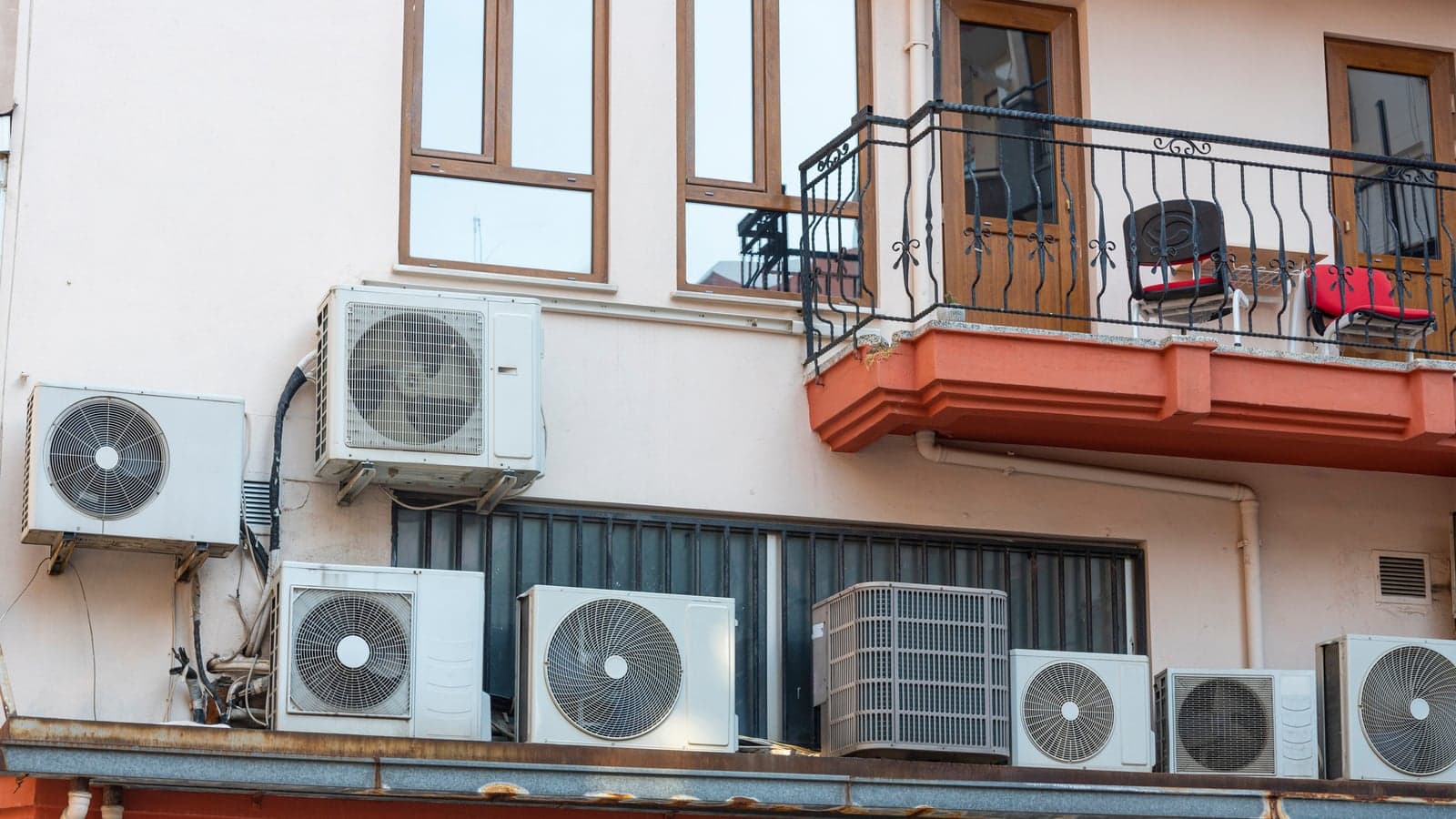
Europe is warming faster than the global average and millions of households are already paying the price in health, in bills and in sleepless nights. Cooling a home has shifted from a comfort issue to a safety question.
Summer energy poverty refers to households unable to maintain adequate indoor thermal comfort due to insufficient or unaffordable access to cooling. A 2023 EU survey found that 26% of households could not keep their homes comfortably cool; nearly 35% among the lowest-income group. Peer-reviewed studies link inadequate cooling to between 46,400 and 60,000 excess deaths in Europe in summer 2022, 89% among people aged 65 or older.
What keeps us hot
Europe’s cities were not designed for the heat they now receive. Concrete and asphalt absorb heat all day and release it at night (the ‘urban heat island’ effect). Nearly 75% of the building stock is inefficient, most homes were not built without summer thermal performance in mind, and the risk falls unevenly: renters, i.e. 31% of the EU population, cannot renovate and retrofit programmes rarely reach them.
Women face additional barriers, from physiological heat tolerance to safety concerns outside. The Energy Performance of Buildings Directive required member states to submit national building renovation plans by December 2025. How far those plans reach the most exposed will matter.
The appliance trap
Faced with a building they cannot change, many households reach for the appliance they can. An air conditioner brings relief and can be even lifesaving, but it drives up electricity bills, releases waste heat into overheated streets and feeds the urban heat island effect.
In Greece in July 2025, a single heatwave drove wholesale electricity prices up 45% in one day, pushed demand toward 10,000MW and placed the entire grid on emergency alert, a warning of what unmanaged cooling demand means for grids everyone depends on and everyone pays for.
Passive measures, such as closing blinds, using fans, reflective roofs, and urban greening, are low cost and proven. Greater access to active cooling tends to raise overall consumption, which is why efficiency and equity must advance together.
The price of staying cool
You can’t buy relief if you can’t afford it. A 2026 survey by the European Environment Agency and Eurofound found that nearly two-thirds of the least affluent respondents could not afford to keep their homes cool in summer; among renters, 49%.
EU data on utility bill arrears reinforce this: nearly half of households in arrears reported being unable to keep cool in summer 2022, compared with 24% without arrears. The gap is wide, growing, and demands urgent action.
Three things Europe must do now
Three failures underpin summer energy poverty: invisible data, inaccessible renovation, and unaffordable energy. The EU statistics on the Income and Living Conditions HC070 indicator has been collected only three times in sixteen years (2007, 2012 and 2023). Regular data collection is the minimum condition for targeted policies. Without it, the most vulnerable remain statistically invisible.
Renovation programmes must require summer thermal performance alongside winter insulation and reach renters, not only owners. Young people disproportionately rent, have the least capacity to adapt, and face decades of worsening summers in housing they did not choose. Cities are on the front line: the Covenant of Mayors supports summer energy poverty reporting and local action must be resourced.
Energy tariffs must protect low income consumers during heat periods. Solar generation and cooling demand align in southern and central Europe, making time-of-use pricing a real opportunity. Citizens who ask their energy supplier or local representative about summer tariff protection are right to do so.
Cooling is a matter of resilience. It belongs to Europe’s social contract.
This opinion editorial is produced in co-operation with the European Sustainable Energy Week 2026.
Useful links
- European Commission, 2025. Framing Summer Energy Poverty: Insights and Recommendations for a Resilient Future.
- Joint Research Centre, 2026. Addressing Residential Cooling Demand and Summer Energy Poverty in the EU.
- Eureopean Environment Agency and Eurofound, 2026. Overheated and Underprepared: Europeans’ Experiences of Living with Climate Change.
- Covenant of Mayors. In the Face of Rising Heat: How Can Cities Hit Refresh?
- IEA. The Future of Cooling
About the author
Marine Cornelis is the founder of Next Energy Consumer, an organisation dedicated to putting citizens at the heart of Europe’s energy transition. She authored 'Framing Summer Energy Poverty – Insights and Recommendations for a Resilient Future' for the European Commission’s Directorate-General for Energy (2025).
Related tags
Latest in Projects
All articles+1
E-NERGY Cluster returns to the EU Energy Projects Podcast ahead of EUSEW 2026
The EU Energy Projects Podcast welcomes back the E-NERGY Cluster for its second dedicated episode, bringing together representatives from EU-funded projects EU-DREAM, DIGITISE and CELINE to discuss one of the most pressing challenges of the energy transition: how to place citizens at the center of an increasingly digital energy system.
- Areti Ntaradimou
- 03/06/2026